Table of Contents
- Why this conversation matters
- The three-legged stool: health, wealth, relationships
- An international perspective: the lost-gypsy advantage
- Change as a skill (and a practice)
- The river and the boat: focus on navigation
- Soft skills are the new hard skills
- Improv, failing forward, and confidence
- Wealth in a shifting economy
- How to start building resilience today
- How this project will help
- Topics you might find useful
- FAQ
- Join the conversation
Why this conversation matters
The one thing we can say with confidence about the next decade is that it will not stay the same. Artificial intelligence, shifting economies, rising costs, evolving social norms, and the everyday friction of life make uncertainty the new normal. That can feel paralyzing or it can be energizing. The difference often comes down to the skills, habits, and mindset we bring to change.
The three-legged stool: health, wealth, relationships
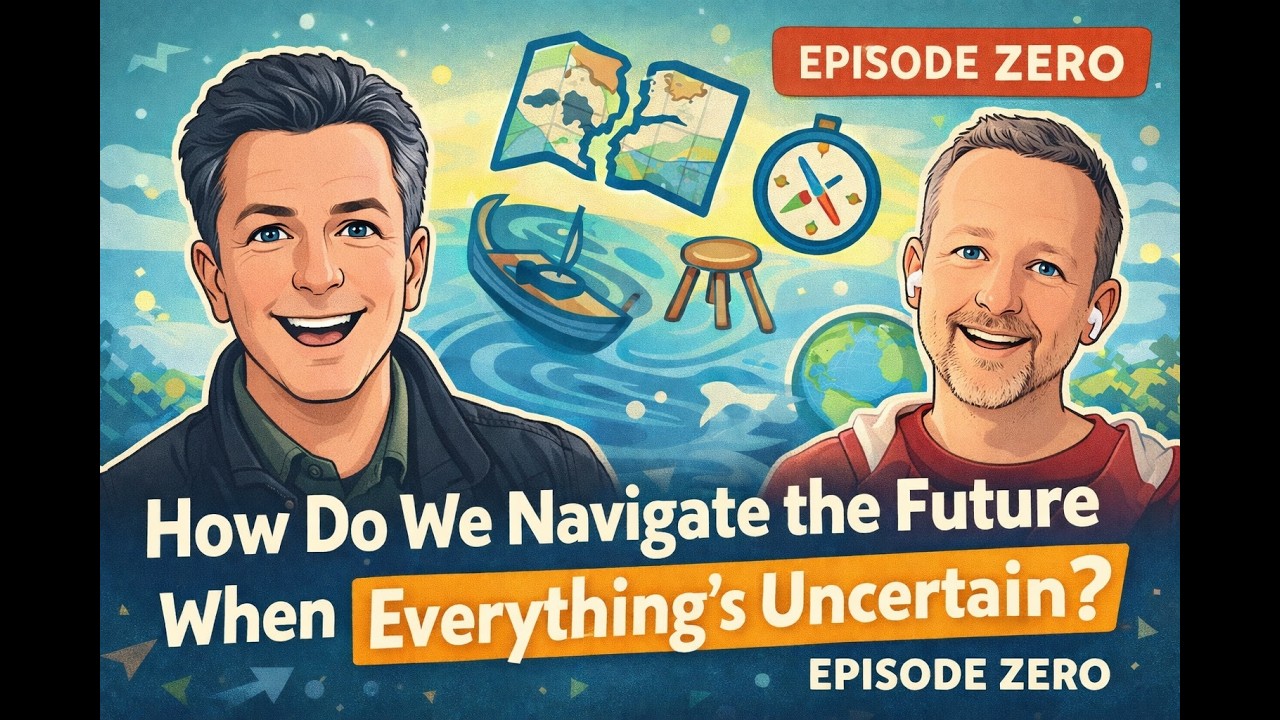
Picture your life as a stool. The three legs are health, wealth, and relationships. You need all three working well to sit comfortably.
- Health: The most important leg. Without it, everything else collapses. Stress, poor sleep, and doom-scrolling are real threats because they erode this foundation.
- Wealth: Not just money. It includes choice, security, and the ability to take action when needed. In times of high inflation and economic uncertainty, how you hold and grow assets matters.
- Relationships: Family, friends, colleagues, and community. These are the social supports that help you rebound from shocks and make better decisions.
If one leg wobbles you can still get by. If two wobble, life gets hard. The goal isn’t perfection; it’s resilience — the ability to keep the stool usable when the ground shifts.
An international perspective: the lost-gypsy advantage
Living across countries, speaking multiple languages, and continually replanting yourself breeds a particular kind of resilience. Moving cultures, juggling different systems, and building networks abroad force you to adapt quickly. That experience becomes a transferable advantage when everything else changes.
If you’re considering a life move or simply want perspective, treat it as training: the more situations you expose yourself to, the more flexible your thinking becomes.
Change as a skill (and a practice)
Change isn’t just an event. It’s a muscle you can exercise. Being comfortable with change means:
- Knowing what you can control and what you cannot.
- Building routines and small daily practices that protect your health and mental bandwidth.
- Learning to pivot quickly without catastrophizing every setback.
Awareness is the first step. Once you notice how you respond to uncertainty, you can design better habits to handle it.
The river and the boat: focus on navigation
You cannot control the river — its speed, rapids, or direction. What you can control is the way you steer your boat. Use that image as a decision filter:
- Ask: Is this within my control? If not, reduce the emotional energy you pour into it.
- Ask: What small, repeatable practices improve my navigation skills?
- Invest in things that increase optionality — skills, relationships, and financial instruments that give you choices when the river changes.
Soft skills are the new hard skills
With AI and cheap access to technical know-how, the premium shifts toward creativity, communication, curiosity, and adaptability. Hard technical skills remain useful, but access to information is now inexpensive. The edge comes from asking better questions, connecting ideas, and applying judgment.
Make learning a joy rather than a grind. Curiosity compounds faster than you think.
Improv, failing forward, and confidence
Improv teaches two related things: fail loudly and be collaborative. Onstage, failure can be funny and useful. Offstage, that same tolerance for failure builds resilience. The rule of improv — make your scene partner look good — translates into real life as generosity, quick recovery, and creativity.
Practicing improv or any low-stakes failure training builds confidence to try bolder moves when the stakes are higher.
Wealth in a shifting economy
Wealth is more than a bank balance. It is freedom, options, and the ability to act. In an environment of rising prices and currency pressure, consider a broader definition:
- Protect purchasing power through diversified assets.
- Develop income flexibility: side projects, entrepreneur skills, or multiple income streams.
- Teach financial literacy to the next generation — skills matter more than blind savings.
Taxes, inflation, and shifting policy are messy. Learn enough to make informed choices or work with someone who does.
How to start building resilience today
- Create a daily practice that supports health: sleep, movement, and boundaries around screens.
- Invest time in one curiosity project: language, coding, public speaking, or a creative hobby.
- Audit your finances for optionality: what choices would money unlock for you?
- Strengthen one relationship intentionally — community matters when things get hard.
- Build low-stakes experiments for failure: improv, side hustles, short challenges.
How this project will help
The idea is simple: explore practical ways to brace for and benefit from change, across health, wealth, relationships, and the travel or international experiences that shape perspective. Expect honest conversations, guest input, frameworks you can use, and weekly topics to dig into. The aim is to turn shared uncertainty into shared inquiry and collective action.
Topics you might find useful
- How to teach kids to navigate uncertain careers
- Daily practices to protect mental and physical health during stress
- Practical steps to diversify income and hold assets in inflationary times
- Using improv techniques to build confidence and creativity
- What “wealth” really means: freedom, choice, and experience
FAQ
Where should I start if the future feels overwhelming?
Start small: protect health (sleep, move, reduce doom-scrolling), secure short-term financial optionality (emergency buffer, reduce high-interest debt), and strengthen one relationship. Small wins build momentum and the capacity to handle bigger changes.
Is change something I can get better at?
Yes. Treat change as a skill. Practice situational experiments, learn to separate what you can control from what you cannot, and build routines that keep baseline stability. Over time you become a better navigator.
What does “wealth” mean in this context?
Wealth equals freedom of choice. It includes money but also time, relationships, skills, and experiences. A holistic view of wealth helps you prioritize actions that increase options, not just bank balances.
How do I teach my kids about uncertain careers?
Focus on transferable skills: communication, curiosity, problem-solving, and adaptability. Encourage learning projects, entrepreneurial thinking, and emotional resilience rather than a single prescribed career path.
What role does curiosity play in all this?
Curiosity is the engine of resilience. It keeps you learning, experimenting, and noticing opportunities. With cheap access to information, curiosity and the ability to ask better questions become more valuable than memorized facts.
Join the conversation
If this resonates, pick one small step you can take this week: a short reading on personal finance, a 15-minute improv class, a call with a friend, or a 10-minute morning walk without your phone. The future may be uncertain, but the choices we make today shape how we ride the river ahead.


