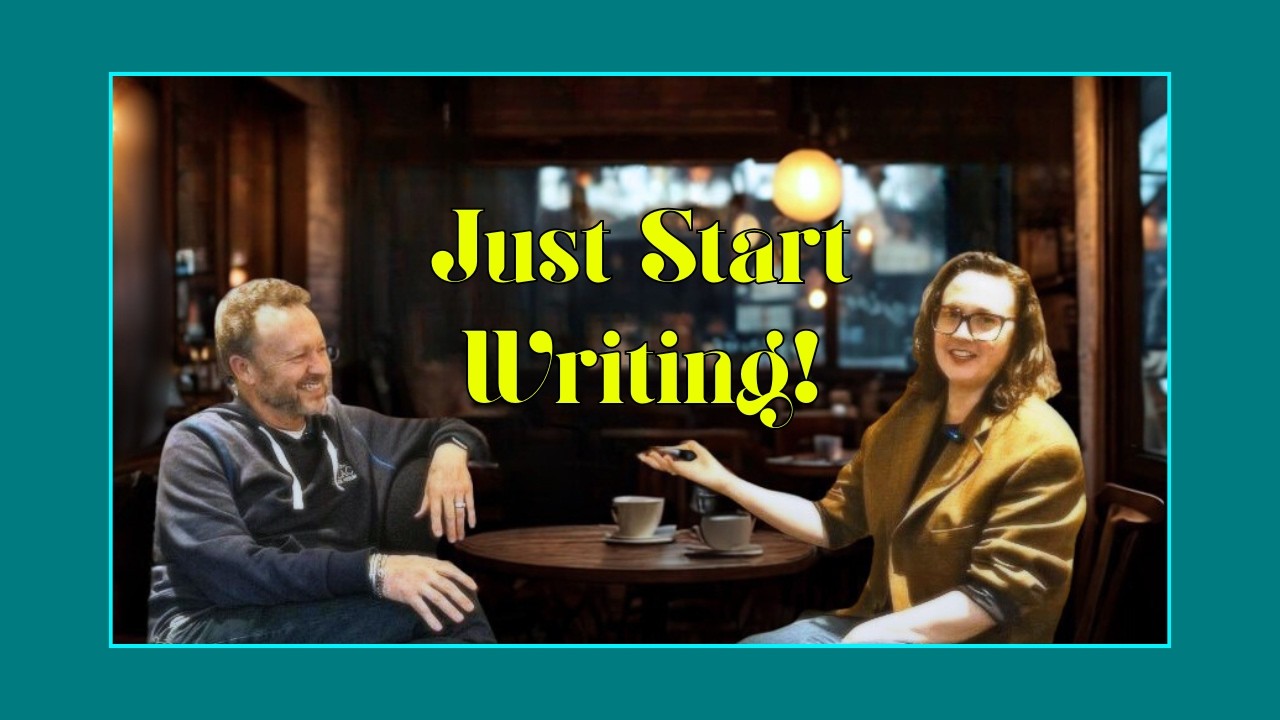
Over coffee in Utrecht I sat down with Bradley Charbonneau to talk about something that quietly eats at a lot of us: the gap between wanting to write and actually writing. Bradley has a way of making creative practice feel practical. He has written more than 40 self-published books and turned tiny rituals into decades of momentum. Below are the ideas, methods, and small strategies that help move work from the realm of fantasy into something you can touch.
Table of Contents
- Why writing matters (even when you think it doesn't)
- From closet hobby to a daily muscle
- Practical habits that defeat overthinking
- Perfectionism: how to get around it
- Writing when your brain works differently
- Fear and excitement are the same energy
- Small projects that scale
- Resources and next steps
- Frequently asked questions
- Final note
Why writing matters (even when you think it doesn't)
Writing is not only about publishing a bestseller. It is an outlet for input to become output, a practice that lets thoughts land, settle, and become useful. Bradley's first clear realization came from reading fiction: words created vivid images and real emotion inside him. Before that, living abroad he wrote long, 50-page letters home—an early, low-stakes practice that trained his imagination and voice.
Whether you are journaling, drafting essays, writing short stories, or creating coaching materials, the value is in the act of making. The purpose is not always public visibility. Often the deepest benefit is personal clarity and momentum.
From closet hobby to a daily muscle
Many people keep creative dreams private because secrecy feels safe—if it never becomes real, it can't fail. Bradley calls that being in the "creator closet." He used to write in secret, stopping on the side of motorways to scribble, not telling colleagues, not admitting the desire publicly.
The turning point came with a simple experiment: write every day for 30 days. No quality control. No expectations. Just daily practice and, crucially for Bradley, publishing publicly every day. That experiment became a habit. He extended the streak into 100 days, 365 days, and ultimately published something daily for 2,808 consecutive days.
Two lessons from that journey:
- Frequency beats perfection. Doing the work daily builds momentum and lowers the fear of imperfection.
- Public accountability amplifies progress. Telling people you are doing it and hitting publish makes the dream real and shifts you from avoidance to action.
Practical habits that defeat overthinking
If overthinking is the default, habit is the antidote. Here are concrete practices Bradley uses and recommends.
- Micro-commitments: Start with a tiny, finishable project. Bradley suggests a postcard or a one-word phone wallpaper that anchors a year's intention. Small wins are addictive in a good way.
- Daily minimums: Set a nonnegotiable tiny task—10 minutes of writing, a single paragraph, or a short post—then build from there.
- Publish early and often: Publish low-stakes work to get comfortable with being public. The "worst book ever" idea intentionally lowers stakes so you finish and learn.
- Time-box work: Give yourself one hour to complete a piece. Deadlines create momentum and reduce the urge to endlessly edit.
- Use community: Join a writing group, a monthly experiment, or a NaNoWriMo-style challenge. Shared commitment turns fear into excitement.
- Ritualize output: Morning pages, a dedicated notebook, a Substack, or a daily YouTube short—pick a format and protect the practice.
Perfectionism: how to get around it
Perfectionism is often a smarter-sounding voice of avoidance. If your first piece has to be perfect, you will never start. Bradley deliberately gamed this with programs that encourage intentionally bad writing. The benefit is obvious: finishing builds confidence and skill faster than waiting for the perfect idea.
Reframe perfectionism into craft: do the work, edit later, and treat every finished piece as practice rather than proof of identity.
Writing when your brain works differently
For ADHD, HSPs, empaths, and other neurodivergent minds, traditional productivity tactics often fail. Here are tailored strategies that respect different wiring while still creating structure:
- Shrink the scope: Tiny creations—one-word wallpapers, five-minute notes, a postcard—reduce executive load while producing visible output.
- Anchor with ritual: Fixed days (for example, every Friday) lower decision fatigue. If you know Friday is your publishing day, you simply show up.
- Use attention-smart platforms: Substack or other email-based systems can nudge you to produce because they push content to real people on a schedule.
- Trade "ready" for "curious": Replace "I have to be ready" with "I'll try this and see what happens."
Fear and excitement are the same energy
Bradley and I like this mental image: you are on a rafting boat. One person in the boat screams with terror. Another is laughing with exhilaration. The situation is the same; the interpretation differs. That tells us something useful—relabeling fear as excitement can shift the physiology and make it possible to act.
Next time nerves rise before you hit publish or open a blank doc, try one small reframe: "I'm excited" instead of "I'm scared."
Small projects that scale
Not everyone wants a 400-page book—and that is okay. Tiny deliverables create momentum and open doors:
- a one-word wallpaper that reminds you of your yearly intention
- a short Substack post sent once a week
- a "worst book ever" written in a weekend
- a postcard or micro-essay that you finish in one sitting
These microprojects become proof of possibility. Once you have finished one, finishing the next one is easier.
Resources and next steps
If you want a tiny, practical way to anchor a year of creation, consider Bradley's Year of You tools. He offers options from a one-word wallpaper to a short book plan at re-possible.com/y-o-y.
Whatever you pick, the core mechanics stay the same: reduce size, increase frequency, and make the work slightly public. The rest is practice.
Frequently asked questions
How do I start writing if I don’t feel ready?
Begin with something tiny and nonthreatening. Set a five- or ten-minute timer and write without editing. Or create a single-image phone wallpaper with one motivating word. Small completed tasks remove inertia and build a habit.
Do I need to publish every day to be a writer?
No. Daily practice accelerates skill and lowers perfectionism, but the true requirement is consistent output. Pick a cadence you can sustain—daily, weekly, or monthly—and stick to it until it becomes routine.
What about self-publishing versus traditional publishing?
Both paths are valid. Self-publishing gives speed and control; traditional publishing can offer distribution and validation. Start by finishing and sharing your work; publication route can be chosen after you have momentum and clarity on audience and goals.
How do I silence my inner critic?
Lower the stakes and build a ritual. Try the "worst book ever" exercise, time-boxed sessions, and frequent small wins. The critic quiets when habit, evidence, and completed projects prove that you can do it.
Any tips for people with ADHD or low motivation?
Use micro-projects, schedule predictable publishing days, and rely on systems that reduce choices. External accountability—small groups, a friend who checks in, or automated email platforms—keeps momentum when motivation dips.
Final note
Creativity is not a rare gift reserved for some. It is an output system that responds to input, habit, and small, repeatable choices. If you are holding back because you think the first thing must be perfect, change the rules: make it small, make it public, and make it finishable. Over time, the daily work turns fear into excitement and the closet opens into a studio.
If you want a single action to take right now: choose a tiny, finishable project and do it within 48 hours. That single completion will change the conversation in your head.
What's Your Word of the Year? |
|
Chelle did it in 55 minutes. |
| Make Next Year "The Year of You" |


