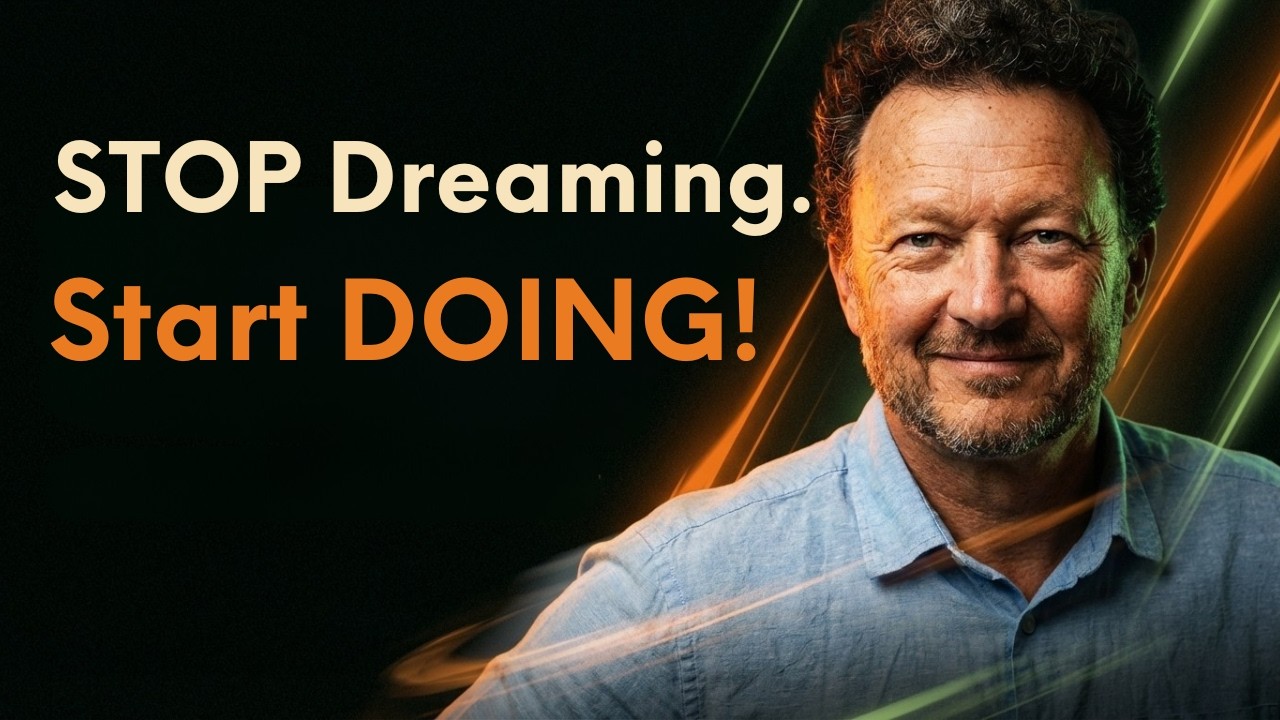
There’s a kind of life that looks successful from the outside but feels unfinished on the inside. The life where you keep saying “someday,” where you have plans, bookmarks, ideas, even calendars… but the actions never quite land.
Bradley Charbonneau describes that season as being “in the writer’s closet.” He had a good life, a solid career, and yet he was hiding the dream he truly cared about. And then, on November 1st, 2012, something clicked. He stopped waiting for the perfect moment and started taking tiny daily actions that slowly rebuilt his identity.
This article unpacks the core ideas behind Bradley’s approach, especially the “Repossible” mindset: redefining what’s possible through small, repeatable steps, daily practice, and an invitation to become the next version of yourself.
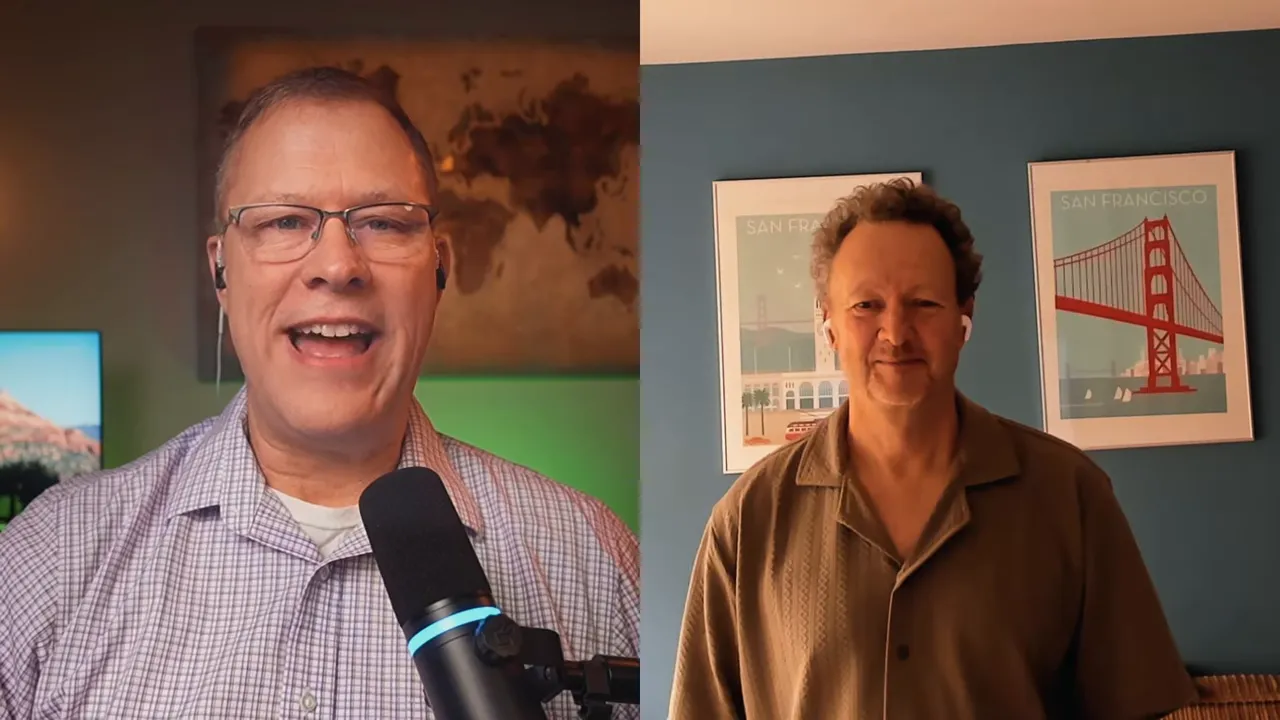
Table of Contents
- The Question That Changes Everything: Who Will You Be Next?
- Boil the Ocean: Tiny Actions Beat Massive Overhauls
- The Quiet Villains: Fear and Comfort Keep You Stuck
- Unrequited Dreams Are Cancerous (Bradley’s Wake-Up Call)
- The Invitation That Changed His Life
- The 30-Day Experiment That Became a Lifestyle
- Daily Practice Beats Fantasyland
- Repossible: Redefining What’s Possible Through Tiny Steps
- Life Is an Experiment, Not a Plan
- Meeting Your Future Self to Make Action Inevitable
- Prayer, Meditation, and Practice (No Fancy Required)
- Sparking Imagination in Kids (and Yourself)
- The Greatest Joy Is Helping Others
- Practical Steps to Start Doing Today
- FAQ
- Final Thought: Get Off the Sideline
The Question That Changes Everything: Who Will You Be Next?
Most goal-setting focuses on becoming the “ideal person.” Bradley’s take is simpler and sharper. Instead of asking, “Who do I want to be?” ask:
Who will you be next?
This shifts you away from huge, dreamy outcomes that never feel real and toward something you can actually build: the next version of you through short-term wins, tiny wins, and actions that compound.
When you focus on “someday,” your brain keeps inventing a fantasy situation where you will finally feel ready. Bradley calls that “Disney” Fantasyland. But real change starts with something almost boring.
- Short-term success creates confidence.
- Confidence makes consistency possible.
- Consistency creates real change.
Boil the Ocean: Tiny Actions Beat Massive Overhauls
Here’s the trap most people fall into: they create a gigantic “mountain” goal in their head, like Mount Everest. Then they freeze because the path to Everest is not clear enough yet.
Bradley’s move is to “boil the ocean” by going smaller. If you want to do something big, start by getting in shape for it.
He uses a vivid example from his writing journey and fitness training. For jogging, the real breakthrough was not running. It was the first habit: “Just put on the shoes.”
That’s the whole pattern:
- You do the smallest step that makes the next step possible.
- You don’t wait for motivation.
- You train the behavior until action becomes normal.
The Quiet Villains: Fear and Comfort Keep You Stuck
Bradley argues that fear and comfort are not dramatic villains with fangs. They are the quiet, familiar forces that feel like part of your personality.
He names some of them directly:
- Procrastination disguised as “I’ll do it later.”
- Imposter syndrome disguised as “Who am I to try?”
- Perfectionism disguised as “Not yet, it needs to be better.”
And here is the uncomfortable truth: these villains do not only block your dream. They also protect you from risking failure.
When you never take the step, you never risk being seen trying.
Unrequited Dreams Are Cancerous (Bradley’s Wake-Up Call)
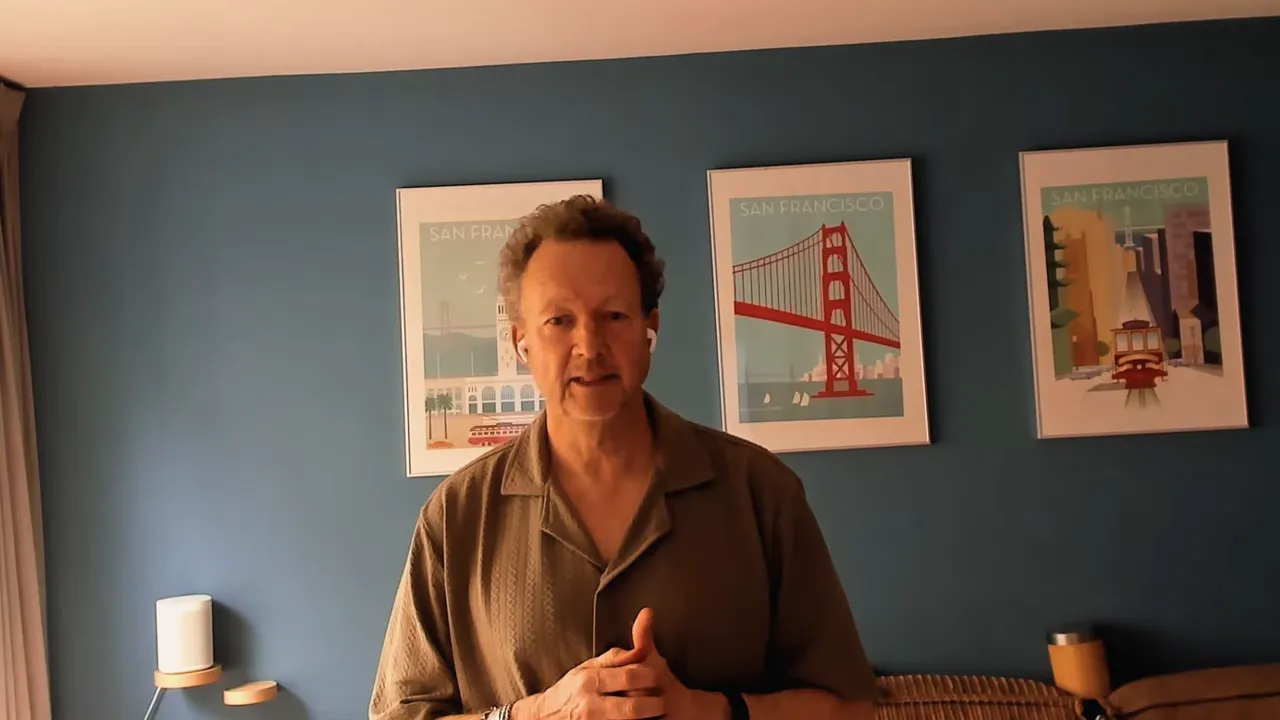
Before he made his dream public, Bradley describes a life that looked fine: he had a house, traveled, lived in San Francisco, and maintained appearances while keeping the dream hidden. He called it “the writer’s closet.”
He wasn’t lacking talent. He was lacking action because the dream mattered too much. If he tried and failed, it would mean he might be seen as a failure.
So he did what many people do: he turned intention into postponement.
He even had a “someday” calendar with a post-it on a date. The problem was simple: “someday is pretty much the same as never.”
The Invitation That Changed His Life
One of Bradley’s most powerful ideas is that transformation is not always self-driven. Sometimes you need an invitation.
He wanted to change. He had wanted it for years. But on his own, he kept delaying. Then a third party asked him to join a 30-day habit experiment.
That date was November 1st, 2012.
Bradley emphasizes the word invitation. He contrasts it with commands. If someone tells you what to do, it can feel heavy. If someone invites you into something, it feels like honor and possibility.
And once he was invited, the burden moved.
The 30-Day Experiment That Became a Lifestyle
Bradley’s turning point was a structured challenge where he did one clear thing: write every day for 30 days.
But the genius was the rule. There was:
- No quality control
- No quantity control
- Just the definition of writing “every day”
He even chose to make it public, which he describes as scary at first because he used to hide the dream.
After 15 to 20 days, something shifted. It stopped feeling like an impossible mountain and started feeling like a routine. He learned you could write junk and still move forward.
Then the challenge expanded:
- 30 days
- 100 days
- 365 days
- Eventually, 2,808 consecutive days of publishing without missing a day
He stopped on the day his mom passed away. Not because the habit failed, but because he chose a different moment of meaning.
Daily Practice Beats Fantasyland
Bradley’s writing ritual was never “writing in a perfect lake view with a sunset and a warm beverage.” That was Fantasyland.
Real writing happened under real conditions: tired, busy, even traveling.
He tells a story about being in Barcelona around midnight. His family was out enjoying the trip, and at the quarter to 12 he had to go write because his deadline was still alive in him. So he returned to the Airbnb, produced something imperfect, and published it.
That’s the secret he returns to again and again:
You don’t only train for the “cool moment.” You train for the boring middle.
“Chow to chow”: the mindset that makes progress normal
Bradley connects this to military training and “living from every meal to the next.” Your goal is not the helicopter-jump fantasy. Your goal is the next step.
Because you discover something encouraging: you are not meeting a hero. You are meeting normal people doing normal steps every day.
Repossible: Redefining What’s Possible Through Tiny Steps
“Repossible” comes from a simple idea:
- re: redefining or repeating
- possible: building evidence through action
Bradley also frames it as repeating possible, over and over, until it becomes your default identity.
In his world, the path is not one giant overhaul. It is:
- tiny steps
- repeatable actions
- daily momentum
He credits the invitation, the experiment, and his willingness to stop going alone. For years he tried to prove he could do it solo. After nine years of that, he finally accepted: sometimes the “solo dream” is just fear in a costume.
Life Is an Experiment, Not a Plan
Bradley uses a mindset reframing that changes how you interpret your own efforts. Instead of treating your life like a pass or fail performance, treat it like a learning experiment.
In experiments:
- you try
- you observe what happens
- you learn something
- you try again
That’s how you create momentum without being crushed by results. You can write the daily chapter even if it’s terrible. You can record the video even if it’s not perfect. You can ship something and treat the outcome as data.
This also explains why Bradley calls himself a “machine” for creative output. The output is not a single heroic act. It is practice.
Meeting Your Future Self to Make Action Inevitable
Another practice Bradley shares is meeting your future self by writing it down.
He tells a story about traveling where someone, much older, encouraged him to imagine being that age and thinking back to who he was now. The older self gives advice. The current self takes it.
Bradley suggests starting even smaller than 80/20. Try one year out.
Then answer:
- Where are you living?
- What are you doing?
- What makes you proud?
- How do you feel?
Write it in a way that matters. He recommends a specific method:
- Write future achievements as if they are already done
- Be specific
- Choose outcomes you can actually work toward
This creates a psychological shift. Your mind orientates toward the goal, and your day-to-day actions align more naturally.
Prayer, Meditation, and Practice (No Fancy Required)
Bradley also connects consistency and creativity to meditation.
His meditation habit deepened after a personal loss. His father was diagnosed with cancer, he later passed away, and that forced Bradley to confront mortality. In that grief, he went looking for connection and meaning. He describes diving into spirituality, finding a relationship with his father beyond death, and pointing to meditation as a key tool.
He even did Vipassana, including a 10-day silent meditation retreat. He describes it as brutal and difficult, but also transformative.
But Bradley’s practical point is that meditation does not need to look fancy. It can be:
- walking your dog
- breathing in a shower
- any small moment where you step into a calmer state
Think of it like the “snap-in week” approach. You practice the process before the result. You focus on what you can control.
Sparking Imagination in Kids (and Yourself)
Bradley’s creativity story includes a beautiful parenting moment. He once read a children’s book with his eight-year-old son. When they finished, his son said something like, “We can do better than that.”
That became a seed for a whole program. Bradley invited his kids to create the story, instead of telling them what should happen next. He acted like a translator: he wrote what they imagined.
His key insight was that kids have an open imagination window. They want to build. They want to decide what happens next.
That is the same mechanism adults often need to reclaim: the courage to believe “I can create this.”
The Greatest Joy Is Helping Others
Bradley’s final principle is the one that makes his whole philosophy feel human, not just motivational.
Personal development is great. But when you help someone else succeed, something deeper kicks in: meaning, joy, purpose.
He puts it plainly:
- Helping others creates a “bolt of lightning” feeling.
- Hero status is nice
- But the higher aspiration is becoming a guide
That’s why he frames his role as guidance. His goal is to invite others into their next version, not to perform heroism for attention.
You can earn $100. But the value of helping someone else earn $1 can be greater because you are expanding their confidence, not just your own income.
Practical Steps to Start Doing Today
If you want to apply “Repossible” without overthinking it, start with one tiny action and repeat it.
- Pick “shoes,” not mountains. Decide the smallest step that begins your desired behavior.
- Run a 30-day experiment. No perfection rules. Just a daily action definition.
- Make it public if hiding is your pattern. Visibility can break the closet.
- Write your future self. One year out. Be specific. Make action inevitable.
- Practice without fancy. Meditation can be breath, walking, or shower time.
- Share your progress. Once you succeed, invite someone else in.
And if you are waiting for the “right time,” don’t. There’s nothing special about perfect timing. The only real move is the next tiny step you can do today.
FAQ
What does “Repossible” mean in simple terms?
Repossible is Bradley Charbonneau’s idea of redefining what’s possible by using tiny repeatable steps. Instead of waiting for a perfect moment, you prove possibility through daily action and consistency.
How do I stop relying on motivation?
Adopt a daily action definition and treat it like an experiment. The goal is not perfect output. The goal is practicing the behavior every day until it becomes normal.
What is the “invitation” mindset Bradley talks about?
Bradley argues that change is easier when someone invites you into an opportunity rather than forcing you with commands. Invitations shift the emotional weight and make action feel like honor and possibility.
Do I need to make my dream public to succeed?
Not always, but Bradley found that making his writing public helped break a long pattern of hiding. If your “closet” is the barrier, visibility can become part of your transformation.
What does it mean to meet your future self?
It is a practice of imagining and writing where you will be in a year, including how you feel and what you are proud of. This orients your thoughts and aligns daily actions with those goals.
How can meditation fit into a busy life?
Meditation does not need to be fancy. Bradley suggests simple practices like walking your dog, breathing intentionally, or taking short moments in the middle of daily routines.
Final Thought: Get Off the Sideline
Dreams do not fail because you lack ambition. They fail because time passes while fear stays comfortable.
So pick one tiny thing you can do today. Celebrate the victory. Do it again tomorrow. Then share what you learned and invite someone else into their next version.
That is how the map stops being worn and starts turning into a path.
The Year of You |
|
It's All About You |
| Today Is the Day |


